



In the News–Leadership & Strategy
Kyte Baby CEO issues two apologies in remote working row
Richard Quest, CNN’s Quest Means Business, January 24, 2024
Davia Temin joins CNN’s Richard Quest to discuss Kyte Baby CEO’s apologies for denying the remote work request from a mother whose baby is in the NICU.
“Take a loss, but do the right thing because perception matters…It’s doing the right thing, and sometimes that’s not the right thing for your pocket.”
JPMorgan settles with Jeffrey Epstein victims for $290 million
Nupur Anand, Lananh Nguyen, Luc Cohen and Jonathan Stempel, Reuters, June 12, 2023
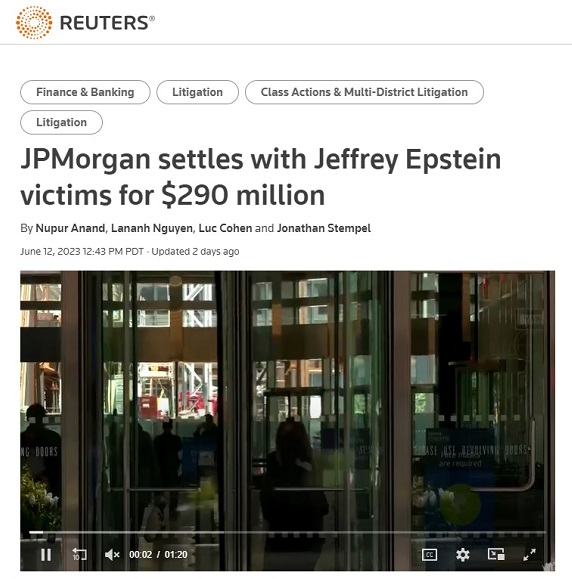
JPMorgan Chase agreed to pay about $290 million to settle a class action lawsuit by Jeffrey Epstein’s victims, resolving a large part of litigation over the bank’s relationship with the disgraced financier.
Monday’s settlement follows months of embarrassing disclosures that JPMorgan ignored internal warnings and overlooked red flags about Epstein because he had been a valuable client.
Davia Temin, chief executive of crisis management firm Temin and Co, said settling rather than fighting to the end sends “the right message across Wall Street.” […read more]
Exclusive: JPMorgan employees gripe about Dimon’s return-to-office edict
Nupur Anand and Lananh Nguyen, Reuters, April 27, 2023
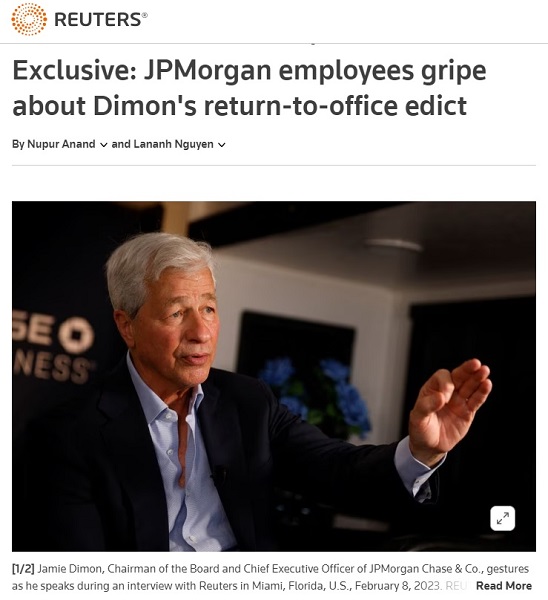
JPMorgan Chase & Co CEO Jamie Dimon sent a clear message to employees this month: get back to the office. It touched a nerve among his staff.
The largest U.S. lender’s employees inundated an internal messaging forum with criticism after its operating committee posted an edict entitled, “The importance of being together.” Some staffers pushed back, calling the message “tone deaf” and “divisive.”
In the nearly 700-word note on April 12 that sent ripples across the financial industry, the bank asked managing directors to return to the office five days a week and warned other employees working on hybrid schedules that they needed to show up three days a week or face consequences.
Davia Temin said employers may roll back pandemic flexibility and demand more in-office working as a recession looms and workers vie to keep their jobs.
“Working from home was introduced during extraordinary times and leaders have the right to change that, especially now as we are likely to be getting into a recession where profitability will be key,” Temin said. “It is not a God-given right, so it can be changed.” […read more]
Don’t Cry. Don’t Curse. Just Deliver the Bad News, Experts Say
Neanda Salvaterra, Agenda, April 21, 2023
 The message for CEOs when delivering tough news, particularly that hits employees in the pocketbook, is to communicate that they are willing to share the burden and take a pay cut, said experts. Something to avoid? Telling employees not to think about what to do if they don’t get paid.
MillerKnoll CEO Andi Owen faced pushback from the public this week for not displaying sufficient empathy and for telling workers to “leave pity city” during a Zoom call in March. Owen made her comments in response to employees raising concerns about staying motivated and potentially not being paid their bonuses due to the company’s experiencing financial hardships.
If a message has been damaging, then experts advise leaders to show contrition and encourage the public to recognize that executives are only humans who can make mistakes and deserve to be extended a bit of grace, according to Davia Temin, president and CEO of risk consulting firm Temin & Co.
“An apology is important. So is trying to change the conversation to ‘all of us are in this together,’” said Temin. She noted that viral moments can be especially tricky to navigate for women.
“The expectations of women leaders are different from expectations of male leaders; psychologists have said employees still expect a woman CEO to be a good mother,” said Temin. “In this instance and in any good organization, empathy and compassion goes both ways. I worry we are responding with anger as opposed to with understanding [and by] saying, ‘She must be under pressure. She’s got to make numbers for office furniture. People aren’t going back to the office as much, and she is trying to take care of her people.’” […read more]
Southwest’s Silver Lining: Memories of Gaffes Fade Fast
Ryan Beene, Bloomberg, December 29, 2022
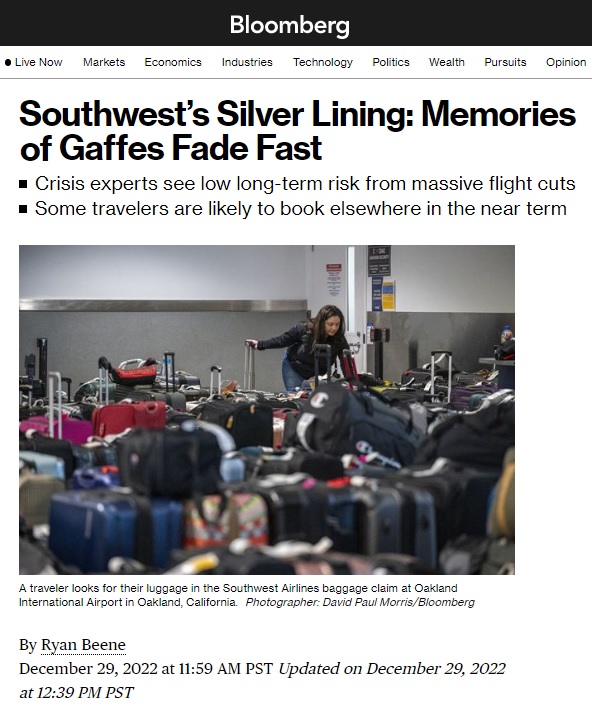
Southwest Airlines Co.’s 2022 nightmare before Christmas is unlikely to inflict long-lasting damage to the carrier’s reputation if management compensates customers and makes good on vows of operational changes, communications and management professionals say.
In recent days, social media has been flooded by angry Southwest customers after storms and shaky computer systems forced the airline, the largest domestic carrier in the US, to cancel more than 13,000 flights. Chief Executive Officer Bob Jordan has issued multiple apologies while employees work overtime to clean up the mess, which officials in Washington vow to scrutinize.
“It isn’t enough for even a well-meaning CEO to give his word,” Temin said. “It has to start a real series of events and change.” […read more]
Companies offer to help employees seeking abortions. It’ll be tricky.
Taylor Telford, Washington Post, July 2, 2022
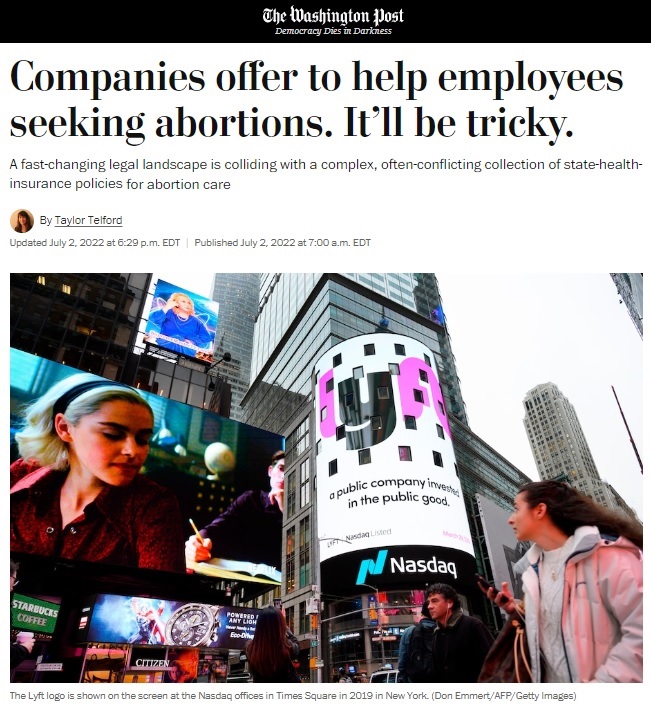
Corporate rules of engagement on social issues have shifted dramatically in the past few years, amid public pressure on companies to take stands on everything from police brutality and racism to climate change and voting rights. The fallout from the end of Roe v. Wade is forcing corporations to redefine their vision for social responsibility yet again, according to Davia Temin, chief executive of Temin and Company, a crisis management firm.
“It is illuminating who we really are, what we stand for, how we are changing, when we take a stand, and when we remain silent,” Temin said.
This time, corporations have largely avoided the sort of impassioned letters to employees and stakeholders that they usually put out while weighing in on key social issues, Temin noted. Instead some companies moved swiftly to expand their health-care plans despite the uncharted territory.
“What corporations are doing in a pragmatic manner is they are coming up with solutions for their people — because, of course, some of their employees are extraordinarily upset,” Temin said. “Instead of the persuasive and heartfelt letters, you’re getting action.” […read more]
Big Employers Say They’ll Pay for Abortion Travel After Roe Reversal
Jeff Green and Matthew Boyle, Bloomberg, June 24, 2022
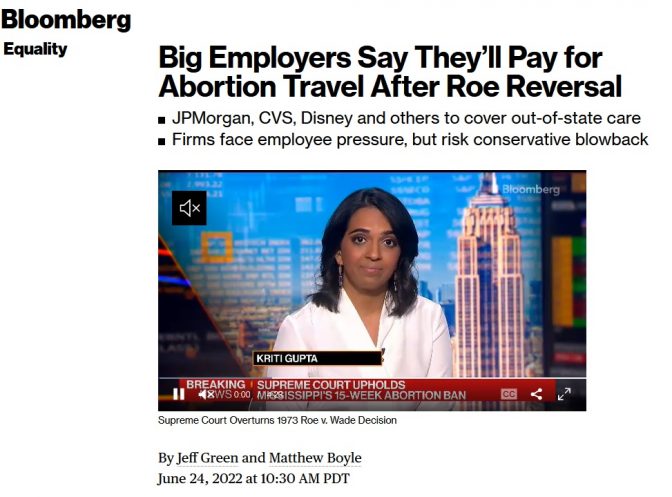
Some of the most recognized companies in the US indicated that they would extend coverage of out-of-state medical care, decisions that will cover more than a million employees after the Supreme Court overturned a half-century-old ruling that protected abortion rights.
Bellwether corporations from the worlds of finance, media, technology and health care said they would bankroll travel for workers who need access to safe, legal abortions and other procedures. The court’s decision overturned a decades-old precedent that backers say reshaped the modern economy by increasing opportunities for women.
“This is the hottest of hot potatoes,” said Davia Temin, founder of New York crisis consultancy Temin and Co. “Because companies are commenting on social issues more than ever before, the need to do the same around abortion is swirling through corporate America.” […read more]
CEOs Speak Up
Diane Brady, Forbes CxO, June 14, 2022

Leadership is an always-on task these days…. So how do you find success heading into the second half of an unpredictable year? Resilience, with a dose of courage.
Resilient leaders push for real change…. Where there there are threats to hard-won equality, leaders are expected to take action, as Disney CEO Bob Chapek discovered earlier this year.
Leaders are also expected to add their voices to public debate. Davia Temin, a New York-based reputation strategist and leadership consultant, argues that “in a world where everyone is demanding their own voice, people expect the companies they work for, invest in or do business with to do the same.” The result, she says, is that brands have become like individual personalities that need to be articulated at the top and reinforced by action. On top of that, she adds, “there are moral imperatives that people in the C-suite respond to as human beings.” […read more]
What The Spotify, Glenn Youngkin And Eric Lander Statements Tell Us About The Art Of Apologizing Today
Jena McGregor, Forbes, February 8, 2022
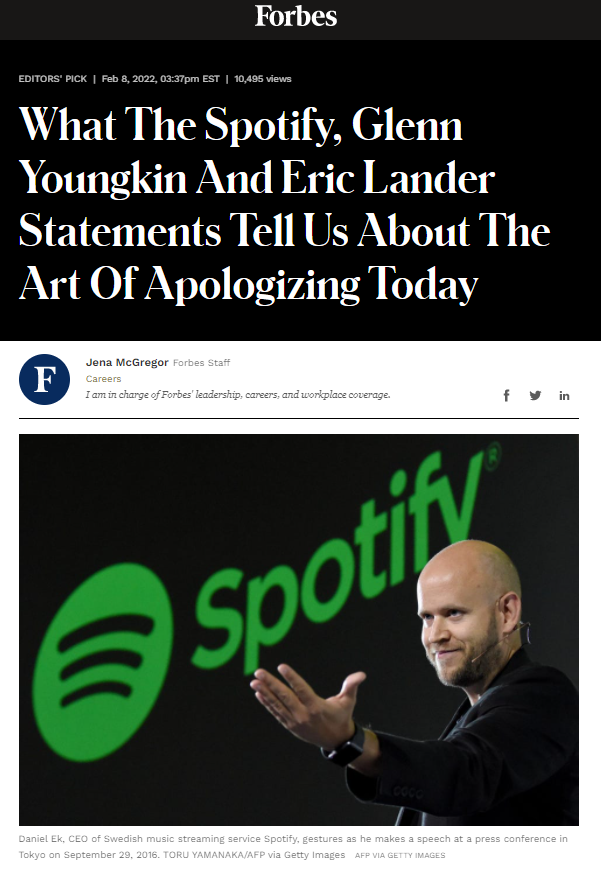
It’s been a big week for high-profile apologies.
Virginia Gov. Glenn Youngkin said he regretted what he called an “unauthorized” Twitter swipe from his team to a teen. Biden administration science adviser Eric Lander apologized for his treatment of subordinates. Joe Rogan said he was sorry for his use of the n-word in past podcasts just a week after an earlier apology about conversations on his show with vaccine skeptics. And Spotify CEO Daniel Ek apologized to staff for the impact on them of the racial slur controversy as the streaming service’s P.R. crisis continues.
But how effective apologies are often depends on how much responsibility the person takes—and increasingly important, who’s doing the listening. Communication pros say that while good apologies take unfettered ownership for what happened, the practicalities of a divided country mean it’s harder than ever to offer an apology that will appease everyone.
“In any discussion today it’s almost impossible to make everyone happy—and apologies are the same,” says Davia Temin, a communications adviser who is also a contributor to Forbes. “If you string a few of the right words together it can sound to people like it was an apology. … The art of the non-apology has been refined tremendously.” […read more]
Most People in Workplace Relationships Don’t Tell HR
Ella Ceron, Bloomberg, February 7, 2022

The pandemic has brought a flowering of the workplace romance — but most of the office lovebirds aren’t telling human resources about it.
About a third of U.S. workers say they’re currently in or have been a part of a workplace romance, up from 27% two years ago, according to a survey from the Society for Human Resource Management (SHRM). But 77% of respondents said their employer doesn’t require them to disclose such a relationship. And so, not surprisingly, an equal number (77%) of survey takers haven’t informed their employer about office romances they’ve been involved in. That can lead to problems.
“A lot of people would rather kiss a rattlesnake than go to HR and say, ‘I’ve entered into a consensual relationship with my coworker,’” said Davia Temin, the CEO of crisis consultancy firm Temin and Co. “It’s not the most comfortable thing to do. And you don’t know whether it’s going to last.” […read more]
More News Articles