


In the News
Podcasts »
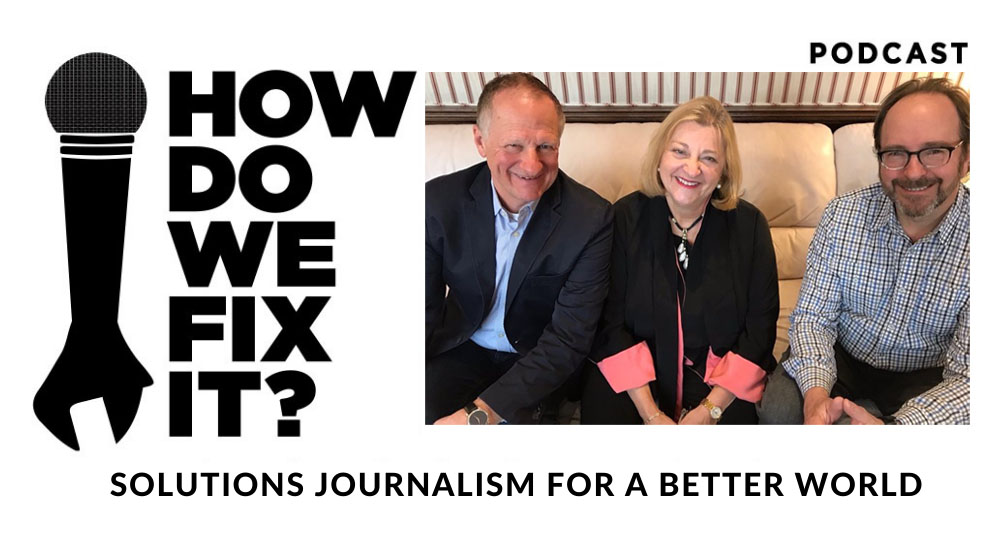
America’s Leadership Crisis: Davia Temin — How Do We Fix It? podcast with host Richard Davies
To listen, Click Here.
Companies: Crisis and Common Ground — Let's Find Common Ground podcast with hosts Richard Davies and Ashley Milne-Tyte.
To listen, Click Here.
Communicating with Authority and Compassion in Crisis or Opportunity — Voice America’s Out of the Comfort Zone with host Wanda Wallace.
To listen, Click Here.
Leading Through Crisis & Chaos — Know the Rules of the Game® Podcast with host Desiree Patno & Special Guest Davia Temin.
To listen, Click Here.
Temps at the Top — Marketplace with Kai Ryssdal.
To listen, Click Here.
You Can Eradicate Sexual Harassment in Your Organization — Monday Morning Radio.
To listen, Click Here.
Leading in a ‘Me Too’ Era
In the era of #MeToo, leaders need to know what to do to prevent the problem in the first place.
To listen, Click Here.
...more »
Temin and Company is often quoted in print, broadcast and social media on topical issues as well as industry trends.
Following is a list of links to those articles, beginning with the most recent.
The Morning Risk Report: Can the Auto Industry Redeem Itself?
Ben DiPietro, The Wall Street Journal’s Risk & Compliance Journal, October 2, 2015
Volkswagen’s emissions deception. Fiat-Chrysler underreporting its death and injuries totals. General Motors’ ignition switch scandal. Toyota’s gas pedal bungle. Takata’s air bag mess. The automotive industry has been taking one reputation hit after another, leading to costly recalls, criminal charges, hefty fines and unhappy customers, dealers and shareholders. What can the industry do to clean up its image? Or do they even have to, as the latest sales figures show the industry is poised to have its best year since 2000?
“Cynically, they’re saying ‘It doesn’t matter to our bottom line whether we lie or whether you know we lie or whether x number of people die because of the things we lie about. You still have to buy from us. Maybe I’ve degraded the brand but you don’t have anywhere else to go,’ ” said Davia Temin, president and chief executive of crisis management firm Temin and Co. Assuming the industry wants to clean up its reputation, she said it needs to stop making promises to fix its problems and actually fix those problems–then communicate to its constituencies. […read more]
When Bad Things Happen: 4 strategies for managing reputational risk
Lisa Valentine, Banking Exchange, October/November 2015
Reputation is all about perception: how customers, employees, investors, and other stakeholders view your financial institution. The goal is alignment between the image you think you portray and what people really think. Reputation drives revenues–and it can also help insulate your institution from brand damage due to events such as cyber attacks and regulatory actions. They key is to build your brand resilience so that customers perceive your institution positively, even when unfortunate situations occur.
So how can financial institutions approach reputational risk, given the challenges of managing and measuring the risk?
For most financial institutions, the best defense will be a good offense: going out of their way to build goodwill that can carry them through a tarnish to their brand; monitoring their reputation on social media; and preparing for the inevitable event that can potentially damage reputation with a well-thought-out crisis playbook.
This article discusses these three strategies and a fourth – the importance of being flexible – with the experts.
“A great reputation can get you through a problem,” points out Davia Temin, president and CEO of Temin and Company. “It’s a simple concept, but people often forget it.” […read more]
7 Secrets Of People Who Have It All Together
Gwen Moran, Fast Company, September 24, 2015
You know them: Those people who seem to glide through life effortlessly. They get through the workday without getting flustered, usually looking great while doing it. They don’t seem to struggle with juggling the demands of work and life. They just have their acts together. Do they know something we don’t?
“In some sense, yes,” says leadership coach Davia Temin, founder of Temin and Company, a New York City reputation management company. Temin says that, while no one has a perfect life, some people have figured out the key to looking like they do. And, often, they share some commonalities. […read more]
Crisis of the Week: United Airlines Faces Turbulence Amid Federal Probe
Ben DiPietro, The Wall Street Journal’s Risk & Compliance Journal, September 21, 2015
This week’s crisis of the week takes a look at the statements and actions of United Continental Holdings Inc., which replaced its CEO and two of his top executives amid a continuing corruption investigation by federal prosecutors.
In a statement, the company said it decided to replace Mr. Smisek and the other two executives as a result of its own internal investigation into its dealing with the Port Authority. The airline’s board apparently decided to cut ties with Mr. Smisek a few weeks before the announcement of his departure. During a conference call discussing its latest quarterly results, the company said it wouldn’t comment further as the investigation is ongoing.
Looking only at what the company has said publicly in its statement and on the conference call, we asked the crisis experts to gauge how well United has handled this crisis.
“‘By the book,’ is how United Airlines said it conducted its investigation of former CEO Jeff Smisek, and by the book is how its board and new CEO have handled every communication regarding management changes. Communications have been textbook–word-perfect, well-vetted and bloodlessly on message. But there are times when ‘by the book’ is simply not enough to do the job, and this is one of them. Extraordinary measures are needed,” says Davia Temin. […read more]
Business continuity planning and disaster recovery
Larry Jaffee, SC Magazine, September 2015
The Sony Pictures hack should serve as a wakeup call for all organizations to consider the importance of business continuity (BC) and disaster recovery (DR) plans. However, an informal survey undertaken by SC Magazine of IT security professionals and crisis communications experts reveals that anyone could be caught with their pants down.
“A cyber breach can be an extinction-level event for an organization if it’s handled wrong or unfolds at breakneck speed unaddressed. That could destroy the organization,” says Davia Temin.
During a crisis, a company’s various stakeholders must be considered, she points out, posing basic questions: “If you’re a financial firm, how does trading continue? How do you communicate with your customers? How are your people using email? Do they have access to email?”
If a call center gets hit with a tornado or hurricane, a company obviously must have contingency plans to outsource to a third-party vendor and backup data off-site. “That’s the nitty-gritty, tactical operational stuff that makes businesses work,” Temin says. That kind of planning should be going on all the time. […read more]
Communicating with Authority and Compassion in Crisis or Opportunity
Wanda Wallace, “Out of the Comfort Zone,” Voice America, August 21, 2015
 The most admired leaders are admired because of their skill in communicating. What do these leaders do and not do that sets them apart? The answer to that question is what the show is all about. We will be talking with Davia Temin, President and CEO of Temin and Company, about how leaders inspire, how they convey authority and what they do when things go wrong. […read more]
To download the episode, CLICK HERE.
Dealing with a data breach or hacker crisis
Doug Barney, GFI Blog, August 5, 2015
Data breaches are getting worse and more expensive every day and it often takes far too long to clean up the mess. Recently the media was inundated with cases of big brands being hacked and millions of personal records were affected. Websites like AdultFinder and Ashley Madison are just two of these high profile cases, and apart from the immeasurable damage such breaches can have on customers, they also deal a big blow to the brand’s reputation.
In the worst of cases, the breach isn’t discovered, even if the data is being put to criminal or evil use right under an organization’s nose. Part of the problem, according to a crisis management consultant at the conference Unintended Consequences: Impacts of the Internet of Things (IoT) & Big Data is that many companies tackle these events all wrong.
“I am going to ask you to throw away every rule of crisis management you have ever known, as we explore how cybercrime is rewriting the crisis management rule book,” said Davia Temin, CEO of Temin and Company in the conference’s keynote address. […read more]
Crisis of the Week: Accounting Problems Hobble Toshiba
Ben DiPietro, The Wall Street Journal’s Risk & Compliance Journal, July 27, 2015
The crisis this week involves the actions taken by Toshiba Corp. in the wake of an accounting scandal that saw the company overstate earnings by more than $1.2 billion over seven years. The fallout from the scandal escalated last week, when the company announced the resignation of Chief Executive and board Vice Chairman Hisao Tanaka and a reorganization of its board in which half the members are stepping down. A report from the company into the overstatement said its three most recent CEOs all played roles in inflating the company’s operating profit.
Looking only at the statements of company officials, and the actions taken in removing the CEO and reshuffling the board, we asked the crisis management experts how well has the company handled this crisis? Where has it done particularly well? Where has it fallen short? What should it do next?
Davia Temin responds: “It is extraordinarily difficult for a company to buck its own tradition and culture. Japanese companies have always been opaque and less than communicative, and are not known for admitting to misdeeds until they are absolutely forced to–and sometimes not even then. Much pain could have been avoided had they owned up to their problems quickly, rather than doubled down through denial.” […read more]
Crisis manager, executive coach Temin to discuss resilience, bouncing back
Deborah Trefts, The Daily Chautauquan, July 13, 2015
Some people take life’s curveballs and crises in stride; they handle adversity remarkably well. Others take longer — or seem unable — to move on. They get stuck or fall apart.
“Nobody gets out of this life unscathed,” said Davia Temin, a global reputation strategist, crisis manager and executive coach.
At 1 p.m. today at the Chautauqua Women’s Club House, Temin will give a talk titled “Resilience: Bouncing Back from Life’s Slings and Arrows,” as part of the Chautauqua Professional Women’s Network series. It will include new research about what people can do to influence their reaction to fate. […read more]
Most Companies Approach Crisis Management in ‘All the Wrong Ways’
Tara Seals, Infosecurity Magazine, June 23, 2015
More than two-thirds of US executives are worried that cyber-threats will impact their company’s growth, but it is probable that companies are preparing for the inevitable business and reputational hits of a cyber-attack in all the wrong ways.
“Traditional crisis management techniques may be time-honored, but often they are static, formulaic and constrained—simply not adequate for the dynamic, nuanced, multi-faceted and ubiquitous nature of cybercrimes today,” said reputation and crisis strategist Davia Temin, CEO of Temin and Co. “In reality, cyber-crisis management is a combination of crisis management, and emergency and terrorist response, which necessitates internal and external cooperation and communication of an unprecedented nature.
As such, it straddles the line between enterprise risk management, business continuity, emergency response, reputation management and corporate governance, she added—a fact that too few organizations embrace. […read more]
Podcasts »
Leading Through Crisis & Chaos
Know the Rules of the Game® Podcast: with host Desiree Patno & Special Guest Davia Temin.
To listen, Click Here.
Temps at the Top — Marketplace with Kai Ryssdal
To listen, Click Here.
You Can Eradicate Sexual Harassment in Your Organization — Monday Morning Radio
To listen, Click Here.
...more »