


In the News
Podcasts »
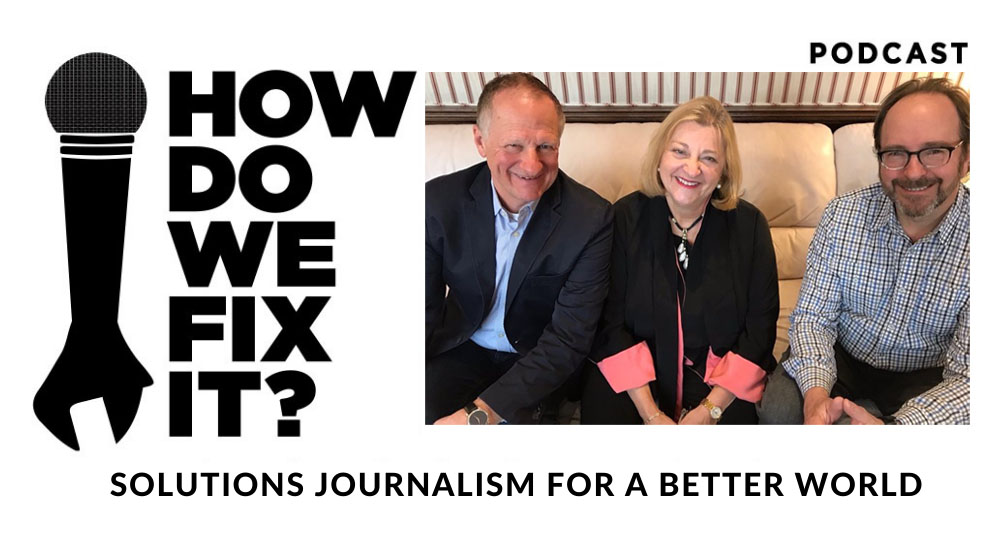
America’s Leadership Crisis: Davia Temin — How Do We Fix It? podcast with host Richard Davies
To listen, Click Here.
Companies: Crisis and Common Ground — Let's Find Common Ground podcast with hosts Richard Davies and Ashley Milne-Tyte.
To listen, Click Here.
Communicating with Authority and Compassion in Crisis or Opportunity — Voice America’s Out of the Comfort Zone with host Wanda Wallace.
To listen, Click Here.
Leading Through Crisis & Chaos — Know the Rules of the Game® Podcast with host Desiree Patno & Special Guest Davia Temin.
To listen, Click Here.
Temps at the Top — Marketplace with Kai Ryssdal.
To listen, Click Here.
You Can Eradicate Sexual Harassment in Your Organization — Monday Morning Radio.
To listen, Click Here.
Leading in a ‘Me Too’ Era
In the era of #MeToo, leaders need to know what to do to prevent the problem in the first place.
To listen, Click Here.
...more »
Temin and Company is often quoted in print, broadcast and social media on topical issues as well as industry trends.
Following is a list of links to those articles, beginning with the most recent.
Educating boards
Larry Jaffe, SC Magazine, May 2, 2016
C-suites and boards of directors are increasing their knowledge of IT security risks and needs – before a breach happens. Larry Jaffee reports.
Cybersecurity clearly falls under board-level governance and oversight, notes Davia Temin, CEO of Temin and Company. Boards have rapidly adopted cybersecurity as an issue because they’ve seen the potential for trouble quickly.
However, not all boards have incorporated cybersecurity into their annual plans or oversight activities. The good news is that more and more are leaning in that direction after reading about high-profile breaches in the news. “It’s a very popular topic on the governance speaking circuit,” Temin adds. […read more]
Crisis of the Week: NFL Goes for Knockout Against New York Times
Ben DiPietro, The Wall Street Journal’s Risk & Compliance Journal, April 4, 2016
Crisis of the Week jumps into the fight between the National Football League and the New York Times, looking at how the NFL responded to a story alleging the league under-counted the number of players who had suffered concussions.
Using only the comments made by the NFL, the experts evaluated how well the league has done so far in defending itself, and spelled out how it should proceed.
“If the NFL would not go on the offense in its own defense, who would?” says Davia Temin. “Its response to the NYT is testosterone-driven, using every play in the reputation defense playbook and originating a few more. It also ups the ante, and may not help them in the long run.” […read more]
The trust question: Can Barclays Bank rebuild the brand?
Barbara Kimmel, The FCPA Blog, March 17, 2016
Jes Staley is the newly appointed American CEO of the beleaguered British Barclays Bank. He recently said, “I do believe that trust is returning to our institution. But we will never rest, we are never done. We have to focus on building that trust every day.”
We asked our Trust Alliance members to weigh in on the steps Barclays new American CEO should take to build trust and ethics.
Davia Temin, a leading reputation and crisis response consultant, said, “Rebuilding trust in financial institutions is a complex algorithm that can test the skills of the best financial engineering ‘rocket scientist.’ Far from simply making a pronouncement of one’s intent (although that can be the first step), the organization needs to first deconstruct all the elements that went into building trust in their particular firm in the first place, analyze all the things that went wrong, and then construct a plan to overcorrect the breaches. Because simply fixing them will not rebuild trust, it will only, maybe, stop the erosion. But this is seriously hard work.” […read more]
New speakers and sessions added RegentAtlantic Wall Street Women Forum® 2016, Shifting Gears on Your Journey
RegentAtlantic Press Release, March 8, 2016
Jane Newton announced the full agenda for the 7th Annual RegentAtlantic Wall Street Women Forum to be held on Tuesday, April 5, 2016 from 2pm-7pm. Headlining the invitation-only event will be luminary keynotes, Suni Harford, Head of Markets, North America, Citigroup, and Ina Drew, Independent Consultant and Retired Chief Investment Officer, JPMorgan Chase.
Davia Temin, President and CEO, Temin and Company, will moderate Leveraging the Power of Your Personal Brand, with panelists Jenifer Schweitzer Brooks, Chief Marketing Officer, Golub Capital, and Erika Irish Brown, Global Head of Diversity & Inclusion, Bloomberg LP.
The invitation-only Forum was launched in 2010 and today is one of the most sought after events for senior-level women on Wall Street. […read more]
Crisis management in food retail
Food Marketing Institute and Oliver Wyman, Boardroom, March 2016
Anticipated or not, when a crisis strikes a company, CEOs must be prepared to respond immediately in order to lead their organizations through a potentially catastrophic event. Within the last 5 years alone, the food industry has been at risk for a wide spectrum of crises, including E. coli and norovirus outbreaks in fresh food, cybercrime such as high-tech SQL injection attacks aimed to steal customer data, natural disasters, and traditional and social media public relations disasters. While there are certainly aspects of a crisis response that can be planned in advance, each incident inevitably requires a unique approach.
In many crisis situations, the reputation of a company hangs in the balance and can literally vanish overnight if the crisis is not addressed immediately and correctly. The expansion of social media in recent years has exacerbated this trend, bringing widespread, factually incorrect, and damaging attention to issues such “pink slime” and the presence of horse meat in beef products. These issues have gone viral and, in some cases, pushed companies to the brink of bankruptcy. Interestingly, reputation is rarely the top priority identified by a crisis incident response team. However, given how quickly exaggerations and mistruths spread, reputation does need to remain top-of-mind for every executive in a crisis. […read more]
Crisis of the Week: OSI Fights Back In China
Ben DiPietro, The Wall Street Journal’s Risk & Compliance Journal, February 8, 2016
Food processor OSI Group is this week’s crisis candidate, as it has taken an aggressive stance to fight a court ruling in China finding the company sold “inferior products” to fast-food chains. U.S.-based OSI called the ruling inconsistent and said the charges against it were part of a “smear campaign” by the Chinese authorities. OSI, by going public with its criticism of the Chinese justice system, is going against the norm for how western companies solve disputes in China.
Using only the statements made by OSI since the verdict was announced, the crisis experts evaluated the decision to challenge the government publicly—is it one they would have advised the company to take? Did the company’s response strike the right tone? If not, how could it have been better? What are the next steps you would advise the company to take?
Says Davia Temin, “While there are some crisis counselors who believe that an organization’s first response in crisis should always be to fight back, that is not my belief. I believe response needs to be based on the circumstance. In this one, OSI has shown it will no longer be backed into a corner, docilely. It is doing the right thing, and in the right way.” […read more]
For Interim CEOs, a Job Full of Pitfalls
Rachel Feintzeig and Joann S. Lublin, The Wall Street Journal, January 7, 2016
It’s hard being the in-between boss. The temporary chief executives of Valeant Pharmaceuticals International Inc. and United Continental Holdings Inc. are currently getting a taste of the challenge while the firms’ full-time leaders are undergoing medical treatment.
Few management assignments hold as many pitfalls as that of the interim boss, say those who advise and research such leaders. Temporary leaders must show strength and rally the troops during uncertain times, but they also can’t make bold changes or act like they will run the place long-term.
“It’s a short runway,” says Davia Temin, CEO of Temin & Co. “An interim CEO will rarely be able to change the culture.” […read more]
How can directors address reputational risks?
Elizabeth Judd, Corporate Secretary, April 21, 2015
With three-quarters of companies naming reputational risk as a top risk concern, directors are increasingly seeking methods of risk oversight that are independent of management.
Reputational risk can come in many guises, from cyber-security to environmental, human rights, regulatory compliance, product recalls, fraud, succession planning, quality and even cultural risks. Beyond known risks, there are the ‘known unknowns’, sometimes called ‘black swan’ events.
‘It’s very hard for directors of any organization to get a full handle on what the reputational risks are,’ says Davia Temin, CEO and founder of Manhattan- based reputation consultant Temin and Company. ‘While there are always predictable risks – airlines will have crashes, for example, while consumer goods companies will have fraud or security breaches – some of the worst crises are the ones that come from left field.’ […read more]
Crisis of the Week: Tesla Slams the Brakes on Seat Belt Problem
Ben DiPietro, The Wall Street Journal’s Risk & Compliance Journal, November 30, 2015
The crisis this week deals with Tesla Motor’s decision to recall all Model S cars—about 90,000 of them—because of a problem reported with a seat belt in one of the vehicles. The company said even though the car in question wasn’t involved in an accident, and no one was hurt—and the problem wasn’t found on 3,000 other vehicles it inspected—it decided to proceed with a full recall nonetheless. “We have decided to conduct a voluntary recall as a proactive and precautionary measure to inspect all front Model S seat belts and make absolutely sure that they are properly connected,” the company said in a letter sent to every Model S owner.
Using only the public statements made by the company, or the comments it sent to owners, we asked the experts to evaluate whether the company is doing the right thing with a total recall, or overreacting to a minor problem in one vehicle. Is there more to the company’s response than just dealing with a seat belt issue?
Davia Temin, chief executive, Temin and Co. says: “In this highly unstable world of social media–where anything can catch fire or be totally ignored–Tesla has wisely understood that overreaction can keep problems from going ballistic. Throw every wise solution you have at an incipient problem, especially if human life is at stake, and no one will ever doubt your trustworthy intent.” […read more]
Crisis of the Week: Tesla Slams the Brakes on Seat Belt Problem
Ben DiPietro, The Wall Street Journal’s Risk & Compliance Journal, November 30, 2015
The crisis this week deals with Tesla Motor’s decision to recall all Model S cars—about 90,000 of them—because of a problem reported with a seat belt in one of the vehicles.
The company said even though the car in question wasn’t involved in an accident, and no one was hurt—and the problem wasn’t found on 3,000 other vehicles it inspected—it decided to proceed with a full recall nonetheless. “We have decided to conduct a voluntary recall as a proactive and precautionary measure to inspect all front Model S seat belts and make absolutely sure that they are properly connected,” the company said in a letter sent to every Model S owner.
Tesla’s stock price dropped following the recall announcement, which comes a few weeks after shares slid following a Consumer Reports story calling into question the reliability of the Model S.
Using only the public statements made by the company, or the comments it sent to owners, we asked the experts to evaluate whether the company is doing the right thing with a total recall, or overreacting to a minor problem in one vehicle. Is there more to the company’s response than just dealing with a seat belt issue?
Davia Temin, chief executive, Temin and Co.: “At last someone is finally modeling what great customer care looks like in the new, hyper-connected era. Tesla’s reaction to the seat belt connection problem found in one car in Europe could be called an overreaction by many. But in the face of the totally failed, less-than-truthful public strategies seen from Volkswagen, General Motors and Takata, what Tesla is really doing is setting a new–and much needed–standard for addressing product failures and recalls, especially in the automotive industry.
“Tesla has taken it very seriously indeed. Its voluntary action resets the norm for industry recalls, particularly around issues that could cause loss of life. Tesla’s apparent ‘zero tolerance policy’ is even more powerful because it could have gotten away with doing nothing. Compared to VW, GM, or Takata, certainly the seat belt problem of one Model S does not seem that grave. But Tesla’s reaction shows trustworthy business practices in action.
“In this highly unstable world of social media–where anything can catch fire or be totally ignored–Tesla has wisely understood that overreaction can keep problems from going ballistic. Throw every wise solution you have at an incipient problem, especially if human life is at stake, and no one will ever doubt your trustworthy intent.”
To read the full article, CLICK HERE.
Podcasts »
Leading Through Crisis & Chaos
Know the Rules of the Game® Podcast: with host Desiree Patno & Special Guest Davia Temin.
To listen, Click Here.
Temps at the Top — Marketplace with Kai Ryssdal
To listen, Click Here.
You Can Eradicate Sexual Harassment in Your Organization — Monday Morning Radio
To listen, Click Here.
...more »